


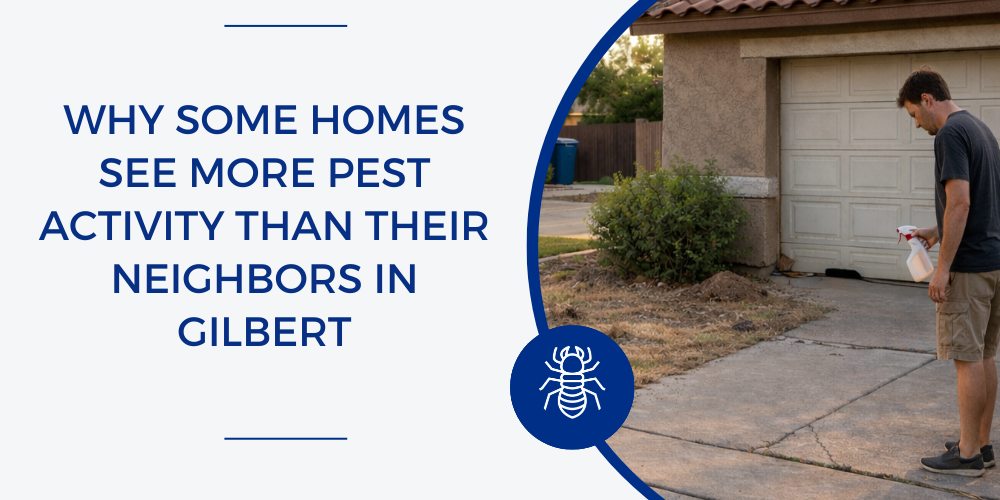
Many homeowners in Gilbert notice something puzzling, two houses on the same street can have very different levels of pest activity. One home may deal with recurring scorpions or ants, while the neighboring property remains relatively quiet. This difference is not random. In fact, several small environmental and structural factors influence why some homes have more pests than others. Understanding these factors helps explain pest activity differences between homes and gives homeowners a clear path to reducing risk. In Gilbert’s desert climate, where heat, moisture, and shelter play a major role in pest behavior, even minor variations around a property can significantly impact pest presence. This guide breaks down why pests are worse in some houses and what practical steps you can take to manage the issue effectively.
Small Environmental Differences Make a Big Impact
Even small differences between properties can affect pest activity. Homes with more shade tend to hold moisture longer, which creates a better environment for insects. Areas that get direct sunlight usually dry out faster, making them less attractive to many pests. Soil also plays a role, loose, damp soil supports more activity than dry, compact ground. Landscaping can further influence this. Yards with dense plants or ground cover provide more shelter, while open and well-spaced areas tend to have less pest pressure. Homes near open land or construction sites may also see more activity as pests move and settle in nearby spaces. These small environmental factors are often the reason behind pest activity differences between homes in Gilbert neighborhoods.
Moisture Around the Home Attracts More Pests
In a desert environment like Gilbert, moisture becomes one of the strongest attractants for pests. Overwatering near the foundation, leaking outdoor faucets, or irrigation systems that create consistently damp areas can draw insects closer to the home. Once pests find a reliable water source, they are more likely to stay and reproduce. Moisture-related issues often come from drip irrigation systems placed too close to exterior walls, standing water in planters or low spots, and condensation forming around HVAC units. These conditions create pockets of humidity that are otherwise rare in desert climates, making them highly attractive to pests. Reducing excess moisture is one of the most effective ways to address why some homes have more pests than others.
Entry Points That Often Go Unnoticed
Pests do not need large openings to get inside. Small gaps and cracks are often enough.
Common entry points include:
- Worn door seals or gaps under doors
- Openings around utility lines and pipes
- Garage door edges that do not fully seal
- Cracks in window frames or walls
Homes with more accessible entry points naturally experience higher indoor pest activity. Even if the outdoor environment is similar, structural vulnerabilities can make a significant difference. Identifying and sealing these gaps is essential for reducing pest control issues in Gilbert AZ homes.
Landscaping Choices Influence Pest Shelter
Landscaping directly affects how close pests live to your home. Dense shrubs planted near exterior walls provide shade and protection, making them ideal hiding spots for insects and other pests. Rock and gravel landscaping, which is common in Gilbert, can trap heat during the day and slowly release it at night, creating a stable environment that supports pest activity, especially for scorpions. Additional factors can further increase the risk. Wood piles stored near the house, accumulated leaves or organic debris, and overgrown plants that touch the structure all contribute to creating sheltered zones. These conditions allow pests to remain undisturbed and close to entry points, which increases the likelihood of them moving indoors over time.
Lighting Around the Home Can Increase Pest Activity
Outdoor lighting is often overlooked but plays a major role in pest behavior. Lights attract flying insects at night. This increase in insect activity, in turn, attracts predators such as spiders and scorpions. This is one reason scorpion activity in Gilbert homes is often higher around patios, entryways, and garage areas with bright lighting. Switching to less attractive lighting options, such as warm-colored bulbs, and positioning lights away from entry points can help reduce this effect.
Neighboring Conditions Also Play a Role
Pest activity is not limited to a single property. Surrounding conditions often influence what happens in your home.
Factors include:
- Nearby vacant lots that serve as breeding grounds
- Construction sites that disturb pest habitats
- Neighboring irrigation patterns that create moisture zones
- Shared walls in certain housing layouts
Even if your property is well-maintained, nearby conditions can contribute to increased pest pressure. This broader perspective helps explain why pests are worse in some houses despite similar upkeep.
Common Pests That Vary Between Homes
Different pests respond to different environmental triggers, which explains variation between homes.
- Scorpions: Often linked to the presence of prey such as crickets
- Ants: Attracted to food sources and moisture
- Crickets: Thrive in humid, sheltered areas
- Cockroaches: Drawn to water and organic material
The combination of these factors determines which pests are more active in a particular home.
Signs Your Home May Be More Attractive to Pests
Recognizing early signs can help prevent larger infestations.
Look for:
- Repeated pest activity in the same locations
- Increased presence around garage or patio areas
- Moisture buildup near the foundation
- High insect activity around outdoor lights at night
These indicators suggest that your home may be creating conditions that attract pests.
Practical DIY Steps to Reduce Pest Activity
Managing pest activity does not require complex solutions. Consistent, targeted actions can make a significant difference.
A. Manage Moisture Around the Home
Adjust irrigation systems to avoid overwatering near the foundation. Repair leaks and eliminate standing water wherever possible.
B. Seal Entry Points
Inspect doors, windows, and utility openings. Use weather stripping and sealants to close gaps.
C. Maintain a Strong Perimeter Barrier
Apply granules or targeted treatments around the foundation, garage edges, and entry points to create a protective barrier.
D. Reduce Shelter Near the Home
Trim plants away from walls, remove debris, and keep storage areas organized to eliminate hiding spots.
E. Monitor High-Activity Zones
Use glue boards and simple monitoring tools in garages, patios, and other problem areas to track pest movement.
These steps align with effective DIY pest control Gilbert AZ practices and help reduce long-term risk.
Why Consistency Matters More Than Location
It is important to understand that pest activity is not determined by whether a home is “good” or “bad.” Instead, it depends on ongoing maintenance and environmental management. Even homes that initially experience high pest activity can see significant improvement with consistent effort. Small changes, like adjusting irrigation, sealing gaps, and maintaining a perimeter, can reduce pest presence over time. Consistency is the key factor that separates homes with ongoing issues from those with minimal activity.
Conclusion
Differences in pest activity between homes are usually the result of small environmental and structural factors, not chance. Moisture levels, landscaping, entry points, and even lighting all contribute to how attractive a property is to pests. By understanding why some homes have more pests, homeowners can take practical steps to reduce activity and maintain better control. With consistent prevention, monitoring, and the right approach, pest problems can be managed effectively regardless of location. For locally suited DIY pest control products and practical guidance tailored to Gilbert conditions, visit Bug & Weed Mart. Their team can help you choose the right solutions for your home.