


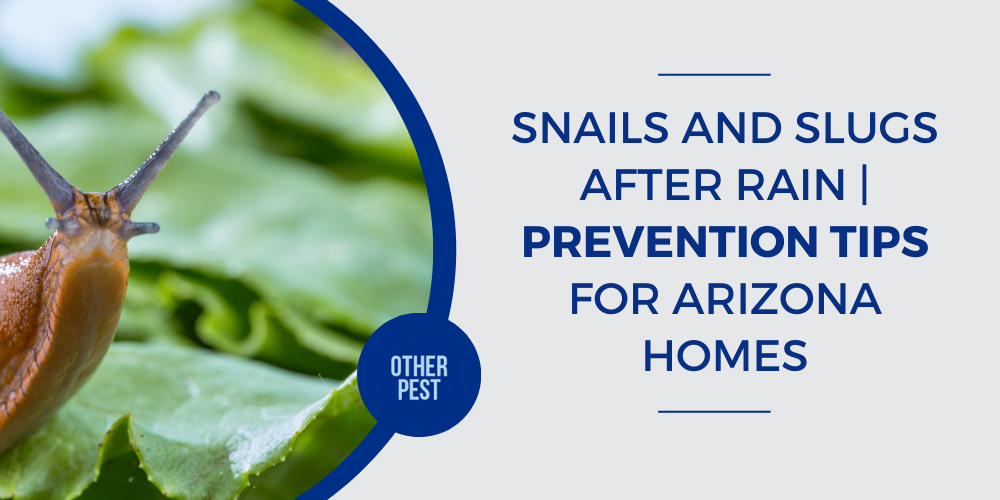
Arizona may be known for its warm, dry weather, but when winter rains hit, it can quickly bring out the pests, especially snails and slugs. Homeowners are often surprised when these gastropods suddenly appear in and around garden beds, along irrigation lines, and near entryways, after periods of moisture.
In reality, snails and slugs have been there all along. When moisture levels rise, these pests resurface, becoming active again. Recognizing how rainfall and moisture influence snail and slug behavior helps explain why they appear so suddenly and highlights the importance of timely prevention.
Why Do Snails and Slugs Become Active After Rain?
Snails and slugs are moisture-dependent pests. Moisture is a primary factor that drive snails and slug activity. Extended rainfall or consistently damp soil allows them to move, feed and reproduce.
During long dry periods, they retreat beneath the surface of soil, mulch and rocks to avoid drying out. Burrowing into the ground like this allows them to survive until conditions improve. Rainfall changes this cycle. When rainfall increases, soil moisture or irrigation runs more frequently during cooler weather, snails and slugs can emerge and move freely across the landscape. Snails and slugs are most active at night and during cooler parts of the day, which is why homeowners typically notice damage before ever seeing the pests themselves. Without intervention, their populations can establish quickly and cause damage to plants and landscaping beyond the rainy period.
Snail and Slug Overview
Snails and slugs are frequently found in Arizona landscapes because they feed on a wide range of plants, especially young, tender growth like seedlings, leaves, and soft fruits. Because they are primarily nocturnal, they often go unnoticed while populations build. Many species in Arizona can reproduce quickly, as they are hermaphrodites and can lay multiple eggs in a single season. Their ability to hide during unfavorable conditions and become active after rainfall helps explain why they are seen so often following weather events.
Signs of Snail and Slug Damage
Snails and slugs feed on a wide range of plants, particularly new growth. Common signs of their presence include irregular holes in leaves, silvery slime trails on soil, rocks or hard surfaces, chewed edges of leaves, and missing seedlings. Damage often appears in shaded areas, garden beds, irrigation lines,s and anywhere water collects after rainfall. Because these pests can remain hidden during the day, visible plant damage is often the first indication that treatment is necessary.
Prevent Snails & Slugs with Moisture Management
Since moisture strongly influences snail and slug activity, prevention begins with managing wet conditions around your home and yard. To maintain less moisture while keeping your landscape hydrated, here are a few tips that may help:
- Avoid overwatering, especially in shaded areas
- Water earlier in the day to allow the soil surface to dry before nightfall
- Remove excess debris that can trap water
- Limit thick mulch layers that create damp hiding spots
- Reduce unnecessary ground cover that provides shelter for snails and slugs
While these steps help reduce favorable conditions, weather events can still trigger activity, which is why targeted control is often necessary even after the rain ceases.
Using Sluggo for Prevention and Elimination
One of the most effective and reliable solutions for controlling snails and slugs is Sluggo. Sluggo is an organic, granular bait specifically designed to target snails and slugs while remaining safe for pets, birds, and other wildlife when used as directed. It is especially useful when moisture brings snails and slugs back above ground. This makes it an ideal solution for gardens, landscaped areas,s and other susceptible locations.
Applying Sluggo for Best Results
Because Sluggo is a bait rather than a spray, it works by attracting snails and slugs directly. The granules are applied by lightly shaking small, visible amounts onto the soil in areas where activity is present. The soil can be wet or dry, as moisture does not affect its efficacy, although snails and slugs are typically found near damp areas. Once applied, the areas treated should be checked every four to six days. As the bait takes effect, homeowners often notice a steady reduction in snail and slug activity, and in many cases, continued use becomes unnecessary once populations are under control.
Long-Term Prevention Through Awareness
Snails and slugs may appear suddenly, but their activity is closely tied to moisture and weather patterns. Each return of wet weather creates an opportunity for these pests to resurface. Understanding how Arizona’s climate influences these pests allows homeowners to act quickly when conditions are favorable for snail and slug activity. By combining moisture management with targeted control methods like Sluggo, it's possible to prevent damage, reduce populations, and maintain healthier landscapes year-round. Early awareness and consistent treatment are the most effective ways to keep snails and slugs from becoming a recurring problem after rainy weather. Bug and Weed Mart is a homeowner's go-to place for getting rid of these slimy pests. Stop in or call any of our locations to get your Sluggo product to prevent future issues.