


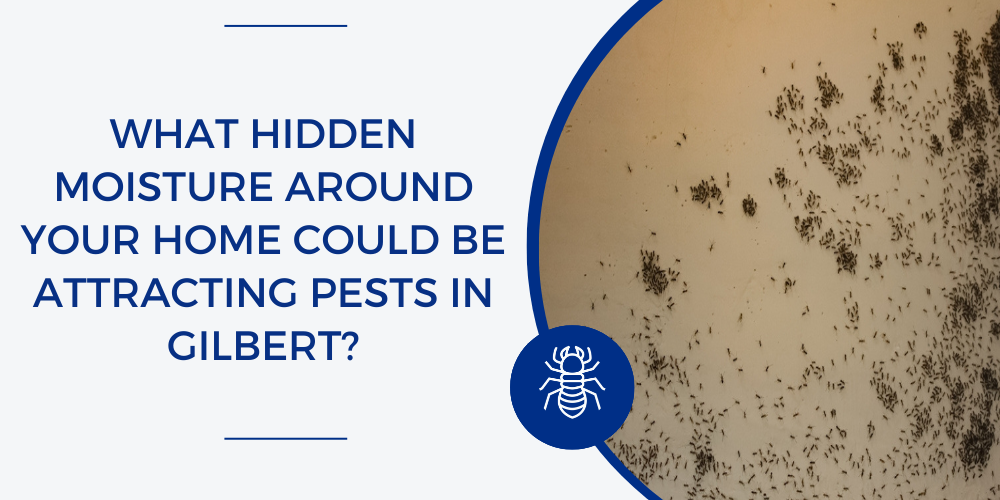
Many Gilbert homeowners think pests come for food or mess. That's partly true, but moisture draws them in most. In desert areas, even tiny hidden water spots can make your home a pest magnet more than your neighbors'. Because Gilbert’s climate is dry for most of the year, access to water becomes a critical survival factor for insects and other pests. This makes hidden moisture attracting pests one of the most important but frequently overlooked causes of infestations.This guide explains how moisture and pest behavior are connected, where hidden moisture sources are commonly found, and how homeowners can reduce conditions that support pest activity. Understanding these patterns is essential for effective pest control in Gilbert AZ, where environmental factors play a central role.
1. Why Moisture Plays a Bigger Role in Desert Pest Activity
In desert regions like Gilbert, water is limited, and pests actively seek it out for survival. Unlike in more humid climates, where moisture is widely available, even small damp areas can become concentrated attractants for multiple pest species. This is why moisture and pest activity are closely linked in Arizona. A minor leak or damp surface can quickly draw ants, cockroaches, and crickets, all of which rely on water to survive. In turn, this can lead to increased scorpion activity in Gilbert homes, as scorpions follow these insects as a food source. This behavior-based understanding highlights an important point: pest presence is often driven more by environmental conditions than by visible cleanliness.
2. Common Hidden Moisture Sources Around the Home
Many moisture sources develop gradually and remain unnoticed, allowing pests to settle in without immediate detection. Outdoor areas are especially prone to these hidden conditions. Slow leaks from outdoor faucets or hose connections can create consistent damp zones near the home’s perimeter. Irrigation systems that overspray onto walls or saturate soil close to the foundation also contribute to ongoing moisture buildup. Air conditioning drain lines are another common source, often releasing small but continuous amounts of water along exterior walls. Pool equipment and decorative water features can introduce additional moisture through minor leaks or splashing, while poor drainage around the home allows water to collect near the foundation after irrigation or rainfall. These conditions often go unnoticed but create ideal environments for pest activity to develop over time.
3. Indoor Moisture Areas Homeowners Often Miss
Indoor moisture is just as important to monitor, particularly in areas that are not regularly inspected. Under sinks and around plumbing fixtures, slow leaks or condensation can persist for long periods without being visible. Laundry areas, especially behind washing machines, can trap moisture due to limited airflow and occasional water seepage. Bathrooms with inadequate ventilation tend to accumulate humidity, creating damp conditions that support pest survival. Storage areas and closets can also retain moisture, particularly when airflow is restricted and temperatures fluctuate. These spaces do not always appear problematic at first glance, but they can contribute significantly to hidden moisture attracting pests if left unchecked.
4. How Moisture Attracts Multiple Types of Pests
Moisture creates a chain reaction that supports different types of pests simultaneously. Ants are often drawn directly to water sources, especially in dry conditions where hydration is a priority. Cockroaches thrive in damp, enclosed environments and tend to remain close to consistent moisture. Crickets are attracted to humid areas, particularly those that provide both moisture and shelter. Scorpions, while not directly drawn to water, follow the insects that gather around these damp zones. This secondary attraction explains why moisture issues often correlate with increased scorpion activity in Gilbert homes. This interconnected behavior demonstrates how a single moisture source can support an entire pest ecosystem.
5. Why Some Homes Have More Moisture Than Others
Not all homes in the same neighborhood experience the same level of pest activity, and moisture differences are often the reason. Irrigation schedules can vary significantly, with some properties receiving more frequent or excessive watering. Landscaping design also plays a role, as certain layouts direct water toward the foundation or retain moisture in shaded areas.
Shade itself is another factor, as areas that receive less sunlight tend to stay damp for longer periods. Construction differences, including grading and drainage systems, can further influence how water moves and accumulates around a home. These variations help explain why one property may experience persistent pest issues while a neighboring home does not.
6. Signs Moisture May Be Causing Pest Activity
Certain patterns can indicate that moisture is a contributing factor to pest problems. Increased activity near sinks, plumbing fixtures, or drainage areas often points to hidden water sources. Pests appearing around garage edges or patio areas may suggest exterior moisture buildup. Crickets and similar insects frequently gather near damp zones, making their presence a useful indicator. Repeated sightings in the same locations also suggest that pests are returning to a consistent resource, such as a moisture source. Recognizing these signs allows homeowners to focus on underlying causes rather than surface-level symptoms.
7. Practical DIY Steps to Reduce Moisture-Driven Pest Activity
Reducing moisture is one of the most effective ways to limit pest activity in Gilbert homes. Adjusting irrigation patterns to prevent overspray near the foundation helps eliminate unnecessary water buildup. Fixing small leaks early, both indoors and outdoors, prevents minor issues from developing into persistent attractants. Improving drainage around the home ensures that water does not collect near the foundation or exterior walls. Maintaining proper airflow in enclosed spaces, such as bathrooms, laundry areas, and storage rooms, helps reduce indoor humidity levels. Supporting these efforts with perimeter protection, including targeted treatments and granules around the foundation, adds an extra layer of defense. These combined steps align with practical, prevention-focused pest control in Gilbert AZ.
8. Why Moisture Control Is a Long-Term Strategy
Moisture-related pest activity tends to be consistent because water sources remain attractive over time. Addressing these conditions directly reduces the likelihood of recurring infestations and limits the factors that draw pests back to the same areas. Focusing on moisture control shifts pest management from a reactive approach to a preventive one. Instead of responding to visible activity, homeowners can reduce the underlying conditions that support it. In a desert climate like Gilbert, where water is a key resource for pests, maintaining consistent moisture control is one of the most reliable ways to achieve long-term results.
Conclusion
Hidden moisture is one of the most common and underestimated reasons for increased pest activity in Gilbert homes. Even small and unnoticed water sources can create favorable conditions for pests to settle, reproduce, and return over time. By identifying and managing these moisture-prone areas, homeowners can significantly reduce pest activity and create a less supportive environment for infestations. A proactive approach that focuses on moisture control is essential for long-term effectiveness. For locally relevant solutions and practical guidance, visit Bug & Weed Mart to explore DIY pest control products designed specifically for Arizona homes.